Showing posts with label Autoimmune Disease. Show all posts

Tuesday, June 14, 2016

The Steroid Roller Coaster

Image Source

If you have autoimmune disease, it’s likely you’ve had some experience with being on prescription corticosteroids steroids.  They can be quite effective to tamp down our overly zealous immune systems and get flares under control.  They are anti-inflammatory and are also used for other conditions like asthma, allergies, and joint inflammation.  It turns out at some point I’ve been on steroids for most of the above issues.  But while they often seem like a potential wonder drug--and at times they have been for me--they are not a medication to be taken lightly.

Let me start with the good news.   They work. When I’ve had bad flares, I mean flares where each second feels like an eternity of pain, getting infusions of high dose IV steroids usually gets things under control enough.  Nothing else has done that for me in those cases.

When I’ve gone to the emergency room with an anaphylactic reaction, steroids (combined with benedryl) gets the swelling of my throat under control.

For me, however, steroids are not just for emergencies. They are part of my monthly infusion routine to decease side effects and also prevent me from having an allergic reaction.  This is where the problems begin.

Because steroids change me.  I must admit it.  The first two days that I am on them, I usually don’t mind the increase in energy they tend to give me. I feel a bit like super woman. I have more energy, I can do more things with my daughter, carry more, walk more, it's great...at first.

But then I get what must be a milder version of what baseball players call roid rage.  I become quicker to frustrate and anger.  I still look like me (perhaps with a more swollen face, which is another side effect), but I certainly don’t feel like me.  Little things really bother me and my patience goes from what I would consider my usual fairly tolerant self to a short fuse.  I feel all around frustrated. I get mad at my husband and I'm often not sure why; basically because he’s simply the person who is with me the most.

I also feel less optimistic on steroids.  My mood drops and I feel down about having autoimmune disease and how it is impacted my life, career, and family enormously.  The glass goes from half full to half empty in a matter of two days.

Mood changes, mood swings, and depression are listed as side effects off steroids. Some of my doctors have told me my low doses shouldn't cause these problems, but they do for me. I have to be on this medication for approximately a week every month, so it's a regular cycle that I should be used to, but it catches me every time.  My infusions have helped bring me from being disabled by autoimmune disease to relatively functional again, but steroids are part of the bargain that comes along with it.

I don't really have a great solution for what to do, but I have compiled a list of things that are marginally helpful.

1)  Remind yourself that how you feel is not really reflective of who you are and this episode will pass.  Of course easier said than done.

2) Warn close family members that you might not be exactly yourself.  Apologize in advance for any ridiculous things you might say.

3) Ask those in your support network to remind you that how you feel is not realistic and temporary.

4) Create A mantra that you and your family can use. “It’s not me talking, it’s the steroids.”

5)  Engage in normal stress reduction techniques.  For me these might include walking, mediation, and making plans with others.

Most of the time, I feel like I am just trying to get clumsily through these tough periods.  I imagine many others with autoimmune disease confront this problem as well and I would love to hear your input on what works for you.

Monday, June 8, 2015

Being an Autoimmune Mama: Stronger than I thought


Image Source
Recently, my husband and I took our first trip with baby to Florida.  It was lots of work to prepare to get away and it took lots of convincing to get me to agree to fly with an infant, but I am glad that we did it.  Overall it was a great trip, but there was one adventure that I just had to share. 

It took me a day to get settled and feel comfortable.  We had gotten the baby into a new routine and now I was ready to relax.  I decided to take my very first bath since the little one was born. I had picked out an actual grown up book; I couldn’t wait to read while she napped quietly.  (This is a real luxury when you have a baby as I’ve quickly learned).  Just as I was beginning to feel like I was on vacation…the fire alarm started going off in our hotel. A false alarm? Not with my luck. A loudspeaker quickly blared that we must evacuate the building.  And where was I?  I was sitting in the bathtub in a room on the 12th floor.  My husband? He was downstairs on the beach.

So I found myself naked and alone with my precious daughter, hearing over a loud speaker that there was a fire.   A dream vacation memory in the making if there ever was one.  I didn’t have time to think. The adrenalin started pumping and I rushed into action.  My baby!  A fire! At first I almost ran out of the room without my clothes. I took a deep breath, threw some clothes on and put the baby in the stroller.

As soon as I got out the room, I started screaming in the hallway that I had a baby and needed help evacuating. There was nobody to be found. Everyone must have been at the beach for the day.  I headed toward the fire exit and started a twelve floor race down the steps, carrying my daughter in her stroller.  (I’m not sure if any of you have lifted a stroller recently, but they aren’t light).

I thought about carrying her down in my arms, but that didn’t seem like the safest option.  The stairway steps were concrete and I wanted my baby protected in something in case we encountered a fire.  I kept thinking over and over, “I must save my baby,” as I ran down the stairs, carrying probably over 35 pounds of baby and stroller. Any thoughts I had of stopping were erased when I smelled smoke in the stairwell. My heart raced faster and my legs took on a life of their own. I was glad for me pre-pregnancy attempts at a stairmaster.

It seemed like the run down the stairs was never-ending. Those fire safety messages from grade school ran through my head, but I wasn’t sure how they were going to help me in a stairwell. As I was nearing the bottom, a nice woman and her middle school aged son helped me to carry the stroller the frame the rest of the way.   When I made it through the fire exit onto the street, all I could feel was utter relief. 

Any thoughts if my sprint had been worth it disappeared when I saw two large fire engines and police vehicles camped in front of the hotel building.

I searched the crowd and saw my husband in the distance and screamed for him. He was petrified of course and had sent someone from the hotel to go and help us get down.

And you’ll never guess the cause of this whole hulabaloo, it was a dryer that had caught on fire.  It was classified as a minor incident according to the police and fire officials.  But it was a fire. For me personally, however, it was major event.

Who would have thought that I would actually have the strength to do something like that?  On a good day lifting 10 pounds can exhaust me.

It gave me the confidence to know that as a person with autoimmune disease, I am up for the major challenges of parenthood.  While I might have to do things differently and creatively, when it comes down to it, I will jump through hoops to protect my daughter.  I also learned adrenalin is some pretty powerful stuff.


Wednesday, January 28, 2015

Being an Autoimmune Mama: The First Months

Image Source
The last months since giving birth to my daughter have been a wonderful adventure, surprising in so many ways... and overwhelmingly exhausting.  It’s hard to describe how much I’ve learned in such a short time from the basics of how to change a diaper and swaddle a baby –-which seemed daunting at first—to how so many things about motherhood feel instinctual to me.  I never understood how my friends would talk endlessly about the small things they would do with their babies. Now, I love the cuddling, cheek kisses, and silly games we play daily. Things that are interesting only to a parent of an infant, but now bring delight to me daily.  

At four months, we've now crossed the early infant stage and we're getting to the more interactive stage of the daily smiles, coos, and hand sucking that are all so much fun.

Now, for my confessional: I must admit that I had real fears before she came was that I would not be able to take care of her because of my health issues.  My worries ranged from big picture fears to specific practical concerns.  I literally lost sleep worrying that she would miss out on what she deserved from her mommy.  I didn’t want her to feel less love than other babies do because of my own health needs.

At the same time, I was also worried about the day-to-day practical challenge of lifting her and taking her around.   Would I be able to carry her if I was tired?  Would she just be trapped inside most of the winter because of neuropathies and arthritic pain? 

So far, I am pleased to be able to say that I have been pleasantly surprised. Yes, I am tired like any new mom…but I am thrilled to report that we are all ok. I am generally as healthy as I was prior to my pregnancy. My daughter, after an early arrival, has caught up and is growing and advancing well.

That’s not to say this has been easy.  My husband and I took steps to make sure we could mitigate the amount of strain I would have. We knew flexibility would have to be our motto... When interviewing pediatricians I realized distance would have to be a factor.  One got extra points because she lived a five minute walk from our house. Then, I wouldn’t have to lift the little one in and out of a car for every doctor’s appointment and could conserve some energy. 

At times, I would hear other moms to be and moms discuss their exact birth plans or how they would exclusively breastfeed and never give their child formula. My husband and I knew we had to approach everything with a different philosophy…what keeps me and baby healthy is the goal--not ultimate perfection. 

Here a few other steps we took to manage a baby with a chronically ill mama that I thought I’d share:

1)   Get Help! Let other family members pitch in and even feed your baby especially during nighttime hours so you can rest.  I found this extremely helpful for the late evening feeding around 11pm or midnight so I can go to sleep early and get some rest before middle of the night wake-ups.  As others know with autoimmune disease, sleep is key and without it symptoms can get worse. 
  
2)    As long as she eats, we’re ok! While breastfeeding is considered best according to my doctor, we also decided before our daughter was born she would also have formula sometimes to preserve my strength.  (It turns out that because she was underweight the pediatrician insisted that we supplement with formula anyway.)  Breastfeeding is exhausting even for healthy moms, but add autoimmune disease into the mix and it can be very depleting.  I breastfeed and pump as much as I physically can (about 5 times a day), but having formula as an option makes it easier for me to take a break when I need to.

3)    Convenience is key.  As I mentioned above, try to make everything as easy as possible for yourself like having a pediatrician nearby. There have been so many more doctors visits than I expected that being able to get there easily has been the most important thing.

4)    Limit Carrying. I try to carry less and order online if possible.  The need for diapers and baby supplies is constant.  When I lift things, I get more tired so I’ve found diapers.com and other baby sites to be a lifesaver.  They are also cheaper, especially when I find discount codes that I track down regularly.

5)    Freeze, Freeze, Freeze. If someone offers to cook for you, say YES.  Having a baby is depleting and I didn’t have the strength to cook at first.  Now that I’m basically recovered, there really isn’t much time to make a wholesome meal. I’ve tasked my mom with making food for me and freezing it so I have something that I can heat up quickly and have ready within minutes.

7)    Assign Tasks.  Being a mom means being a manager. If you’re lucky enough to have family and friends helping you, make sure to have jobs for them.  I promise something always needs to get done whether its dishes, laundry, or sterilizing bottles. Otherwise, everyone will just stare at your little bundle of joy. I learned this one the hard way when I found myself doing dishes after company came on four hours of sleep.

8)  Take time to be a family unit too.  I must admit having our home invaded with family has driven is driving my husband and I a little crazy.  We try and balance all the company by having one day a week when it’s just the three of us.

9) Hand-me-downs help!  At first I thought we would need to get everything ourselves since we had no family nearby with young kids. I found out that the more I talked to friends about what I was looking for, people started sending us stuff. Friends, relatives form afar, even friends from a moms group have all generously been happy to share . (I promised to give everything back of course.)

This is just a short list of things which have made having a little one easier as an autoimmune mama that I wanted to share. What have some of you done to make the infant phase a bit more manageable while living with autoimmune disease?  I'd definitely love the advice and I'm sure other moms  with chronic illness would to.

Friday, June 20, 2014

Where in the World has Autoimmune Gal been?

Image Source
Some of you might have noticed that I haven't been blogging as much.  My twitter and Facebook presence has also dwindled.  But I promise there is good reason for my less frequent communication.

It also happens to be a very exciting and wonderful reason--my husband and I are expecting our first child.  Yes, Autoimmune Gal is pregnant.

We didn't know that having a family would be a possibility given my multiple autoimmune and health issues.  It took lots of communication and coordination with multiple doctors to just plan for the possibility of trying to get pregnant.

Important medical questions and issues had to be addressed.  What medications would I be able to stay on?  Did I need to change medications or lower doses before becoming pregnant or was it safe to wait until a pregnancy was actually confirmed?  How would we keep my autoimmune disease in check, while trying to protect the baby?  Would pregnancy make my autoimmune manifestations worse, the same, or better? And these were just the tip of the iceberg.

With pregnancy many of these questions do not have clear cut answers.  Medicines aren't regularly tested on pregnant women so there is less data than one would like on safety and fetal outcomes.  The doctors have constantly reminded me that if I'm not healthy, the baby won't be either, but this is really tough complicated stuff.  And we've certainly added another big and of course wonderful variable to the careful health balancing act.  

Beyond my autoimmune issues, my pregnancy is super high risk so I'm being monitored you might say within an inch of my life.  I guess you could say I'm super super high risk.   My doctors appointments have more than doubled and every health issue that comes up has to be thought through even more carefully and methodically.  Right now, we're trying to enjoy the pregnancy while keeping our fingers double and triple crossed that everything will be OK.  We know this is such an amazing blessing, but we still have a long way to go.  

So that's my update on where I've been.  I love writing and communicating with all of you and feel like something is missing when I'm not.  I'll keep writing as much as I can.  I know when the baby comes it will be a whole new kind of busy too!

Friday, June 13, 2014

Wise Readers: How You Cope With Patient Burnout?


Thanks to the fabulous and wonderful blogger Julia from Reasonably Well for writing about last week's piece on "Patient Burnout" and asking readers for how they cope with not just having a chronic illness, but the reality of being a chronic patient.

She got some great responses ranging from the importance of humor and laughter, being kind to yourself, and making sure that your medical care doesn't become an experiment for your physicians.  That last one is an important reminder that being a patient means making decisions with your provider,  not just following his/her medical advice blindly.  We also can't forget as another reader, exemplified that venting can be a powerful force and letting our frustration out can sometimes help us move on to the next thing.

I've shared all the responses below since I personally found them extremely helpful and insightful.  Thanks to those who commented for their wisdom.

 Sue said...
I have found that having a sense of humour is very important. Life can beat you down at times but being able to laugh helps things tremendously.

 Heda said...
Hard to even think about this one. One day at a time I guess is one option. Definitely accepting the illness is vitally important. Keeping a sense of perspective. Guarding against the temptation to make things worse than they are. Finding time for friends and family. Being kind to yourself. Respecting yourself especially when it comes to being able to say no to things that you really might want to do but know you can't. Not letting specialists use you as an experiment for their latest hobby horse. No, absolutely no, unnecessary tests. Way too much emphasis on discounting possible obscure diseases when sjogren's is the most obvious cause of a symptom. Is that enough? And I thought I had nothing mush to say about this topic until I started. LOL.

 Kelly said...
Up until recently, I relied on the ostrich maneuver: head in the sand, ignore symptoms or treat with OTC/home remedies and lifestyle changes, stay away from doctors as much as possible and repeat the mantra, "not that sick, not that sick, not that sick..."

But now I am waiting for a promised referral to the nearest Sjogren's Clinic to get a final word on whether or not it's Sjorgren's and if so, do we begin treatment of some sort. If not, then what is it??? The magic words to get the ostrich's head out of the sand were, "Interstitial Cystitis."

Better lay in a supply of yarn as knitting in doctor's offices helps me tremendously. Even when I can't focus enough to read, I can knit and that feels productive. Instead of a wasted day, I have a new sock for me or cotton washcloth for my grandson's pile of face-cleaning cloths.

 Unknown said...
I started with temporal lobe epilepsy in 9th grade, and the onset of endometriosis before that. I had to deal with the epilepsy, obviously, but the endometriosis- I took remember the words my mother's gyno told her: when it hurts bad enough, you will return! (sounds like Arnold in a movie, hmm?) Well, seizures require ongoing maintenance, infertility and the pain from the endo is what finally forced me to get treatment.

Now, with psoriatic arthritis, breathing problems, bladder problems, heart problems, tingling problems, ibs problems from the as yet undiagnosed something else....

what is most frustrating to me is not always knowing which doctor to go see...the internist or the rheumatologist; the dermatologist or the rheumatologist...etc.

Also, the person (people) who I feel is (are) my biggest supporter (my aunt, and my mother), are constantly coming up with off the wall wacky suggestions or bringing up the worst case scenario of someone they knew who had the same disease, implying that my psorisis (which is mild) is going to land me in the hospital also, instead of just being supportive. Or, that my one foot that the swelling refuses to go down in, is going to be like her friends (who has a bone fragment that now requires an ankle replacement). It's not the same thing!! I keep wanting to shout.

aaah. thank you! for letting me say that. That's my patient burnout, just the frustration of not always knowing who to turn to for help. I often go to my primary care, simply because I'm not sure who to see.

Thursday, February 6, 2014

Reasonably Well: Sjögren's and Cognitive Function

Image Source
Everyone should read Julia from Reasonably Well’s excellent post entitled Tufts Study: Despite Burden Sjögren’s Syndrome May Not Impede Function that discussed new research on Sjögren’s Syndrome and cognitive difficulties.   You can read the whole extremely informative post here.  I’m going to comment on some of my favorite parts below and add some of my own reactions.

The Tufts Study concludes that Sjogren’s patients despite their perception “appear to function at a level comparable to their healthier peers.”  This is obviously good news, but Julia addressed some of the potential flaws with the study and raises research questions for the future.

Starting with the issue of fatigue, Julia writes:

I noticed that the assessment of fatigue…was not located in the physical section but rather in the Mental/Emotional locale.  There were no physician evaluations of joint pain, pure neurological problems (as opposed to neuropsychiatric), pulmonary issues, renal problems….to name just a few well-documented extra glandular manifestations of Sjögren’s.

She goes on to say (I love this part).

Since fatigue is one of my most disabling symptoms of Sjs and I'm a bit touchy about labeling fatigue as an all in your head symptom, I found it interesting that elsewhere in the discussion section of this study, fatigue is included under the description of "neuropsychiatric problems".

Well, I must say I’m touchy about this too.  And isn’t their bias in the research if fatigue is classified as neuropsychiatric from the beginning?

And I have had a similar experience to Julia where as she writes that for her tired=stupid.  What a perfect equation. I completely relate.  When I’m having complete autoimmune exhaustion, I also have what I would call brain-fog. 

This idea also got me thinking.  Do studies need to include both disease activity and cognitive function? Would it be worth exploring whether “flares” have both cognitive and physical impacts?  And Julia also brings up another super super important point about study design:

This was not a longitudinal study. Study authors would have no data to support their discussion of length of disease related issues.

In another small controlled study on the subject conducted by doctors and psychologists, including the Director of the Penn Sjögren’s Center, Dr. Frederick Vivino, found significantly lower IQ scores and lower verbal memory scores for the Sjögren’s group (click here for the study). No statistically significant differences were found on concentration and processing speed, visual memory, or executive function.  Interestingly Tufts and the Penn Studies used different measures of cognitive function.  While the Penn study also clearly had its limitations with only 17 participants and it did not occur over a period of time, the authors tend to stay away from broad generalizations, and suggest more research including “correlating neuropsychological findings with neuroimaging.”

On the other hand, the abstract of the Study out of Tufts University concludes that "Sjögren's patients perceive deteriorated physical function over time, but they achieve a level of functioning comparable to controls despite the burden of their illness" (click here for the abstract). In my opinion, that language is a bit misleading. Making physical conclusions about a cognitive study makes little sense. 

Perhaps, if a rheumatologist who regularly evaluates patients and the glandular and extraglandular manifestations Sjögren's had been involved in the study, he/she would have taken other issues into account.

While it is always good to see new research on Sjögren’s, it’s also important that the authors identify the scope and limits of their research. 

Thanks Julia for your excellent post and bringing it to the attention of all us Sjöggies.

What did you think of the Tufts Study?  If you could suggest new research on Sjögren's, what would you focus on?

Thursday, January 16, 2014

Beware: Sjöggie in the Kitchen

Image Source

So I'm starting to feel somewhat better as I mentioned in my last post.  I decided it was time to get back in the kitchen and do a little cooking.  One of my winter favorites is Turkey Soup.  I find it to be richer and tastier than chicken soup and the meat keeps its flavor even after simmering for over an hour.  

For me, however, even making soup can be an adventure. The story goes like this. I'm enjoying my new found post-flare freedom as I cook my delicious soup. I am stirring the soup.  Smelling the soup.  Pretending to be a real cook.  Then the timer goes off.  It is time to taste the very hot soup that has been cooking for close to an hour and a half. I take the ladle holding boiling soup and manage to pour it not in my mouth, but on my chin.  My mind must have been wandering at that critical moment. The soup was very, very hot.  Did I mention it was hot?  Lucky me, I now find myself with a burn. 

At first, I didn't think it was much of anything.   But my chin is quite red where the soup hit it.  No blistering at least, but I definitely have a burn there. I had planned this to be my well-deserved hiatus from doctoring.  Instead, I will be at the doctor bright and early tomorrow morning to make sure that I don't need to do anything to prevent it from scarring or getting infected.  

This is the danger of being both a Sjöggie and a klutz!  When my autoimmune symptoms seem to settle, I absentmindedly injure myself. Well, I guess at least this is a "normal"-person doctor visit.  

I don't want any of this to be taken as a knock on my favorite Turkey Soup. In case any of you want to try your own version, I've provided the super easy recipe below. As with all my recipes, it is adjusted for me significantly due to wide-ranging food allergies.  I'm sure others can add additional flavors, but I'm very limited...and I still think this tastes great. 

Please do beware in the kitchen, I don't want anyone else to injure themselves on account of this soup!

Winter Turkey Soup

Ingredients

2 Turkey Thighs (or other Turkey Parts of your choosing)
4-6 Peeled and Sliced Fresh Carrots, 
8 Small Potatoes 
Fresh or Dried Parsley
2 1/2 teaspoons Sea salt or Kosher Salt
Pepper 
6-8 cups of water

Directions

1) Place turkey thighs in soup pot.

2) Add any vegetables you desire and parsley on top of turkey. ***I'm limited in the ingredients that I can use due to food allergies.  But if I could I would also add garlic, onions, and celery.***

3) Pour six cups of water into pot or enough to cover vegetables and turkey.

4) Spice accordingly with salt and pepper.

5) Bring soup mixture to boil. It usually takes about 20 minutes.

6) Keep soup partially covered and simmer for 1 hour.

7) Stir occasionally and add an additional half cup of water if too much liquid has evaporated.

8) Once finished cooking, transfer turkey to bowl.  When adequately cooled, remove turkey meat from bone and add back to soup. 

9) Serve with your favorite noodles or rice. 

Tuesday, January 14, 2014

Is the Flare Finished?

Alright, I am slowly emerging from my flare.  Thankfully!  I've been out of touch here for too long. It has been a rough few weeks and as those of you know with autoimmune disease, flares and their duration are unpredictable. 

The first interesting thing about this flare is that it appears to have been initially triggered by the flu shot.  Yes, the flu shot.  Now, I know this might sound controversial, but bare with me, this is not my analysis but that of two of my physicians who specifically treat patients with autoimmune disease.

I got the flu shot and 48 hours later my autoimmune symptoms started acting up and then kept getting worse.  Within the next couple weeks, I knew I was in really trouble. I went from being in a position where I could largely manage my Sjögren's to being in excruciating neurological pain.  I had the good fortune of several relatively healthy months, so that I had almost forgot how severe and debilitating constant trigeminal nerve pain can be.  Well, that changed fast. Pain medication wouldn't even touch it.  My eyes became so dry and painful that I had to be put on steroid eye drops.  I stopped being able to read or use a computer all together and went back into survival mode.

Now, being the stubborn Gal that I am, I thought to myself at the time, I can manage this flare myself.  I won't contact my rheumatologist, there isn't much anyone can do for me.  But when the pain started to reach an 8 everyday and I couldn't leave my home, I changed my mind.  Well to be honest, my husband had to partially convince me that it was time to seek medical help.

I was hesitant to even mention the timing of the flu shot with my doctor. I expected my rheumatologist to think that I was nuts since I am so used to doctors touting the important benefits of the shot--particularly for someone who has so many health issues.  But I was surprised. He told me that vaccinations do have the potential to cause activation of autoimmune flares. He said this doesn't mean that you shouldn't get vaccines, or even avoid the flu shot, but there are risks.  (Note: This is in part why I have so much respect for my rheumatologist, he understands that there can be exceptions to the general medical wisdom.)

Then I talked to my eye doctor, who specializes in autoimmune disease. He also had a patient like me who went into a serious flare after getting the shot.  At this point, I was at least sure I was not the only patient who had this happen.  It was helpful to know, but also convinced me to write this post in case others have had a similar issues--however unusual it might be.

I want to be clear I'm not making any recommendation or generalization for other Sjöggies or autoimmune patients.  As I've written in the past, I do tend to experience what are often considered the "rare" or "unlikely" side effects from medications and procedures.  

I currently have my fingers double crossed that I'm on the other side of the flare.  I had to have a number of days of steroid infusions followed by a slow taper to get my overactive immune system under control.  As we all know, being on steroids have all sorts of unwanted side effects including lowering your overall immunity.  Not surprisingly, during this winter season where everyone seems to be sick, I came down with a super bad virus that included fever, cold, and stomach upset that left me flat on the couch for another week.  So here I am again, slowly rejoining the world after another autoimmune blip.  I'm hoping and praying that there aren't many of these interruptions in 2014!

Sunday, December 15, 2013

The View From My Window

There is nothing like the first snowfall.  Pristine, white, and untouched snow.  I appreciate and marvel in the beauty.


Then the novelty wears off pretty quickly.   Because once I venture outside into the wind and the cold, I am instantly reminded of my painful joints and nerves.  It's hard for me to navigate beyond my neighborhood in this winter weather.

I'm grateful for the scenery and the view from my window.  But it also means more days inside.  It can feel like forced hibernation.  I don't know about you, but I would be satisfied with just one snowfall each year and then a quick progression into Spring. 

Wednesday, December 11, 2013

A Flare Has Come Around

Well, I've been absent for a bit with good reason.  It's something many of you are familiar with-- A flare.  

As one of my doctors says " for you flares always starts with the eyes".  My eyes become extra extra dry and uncomfortable (As if they weren't dry enough already).  And then the cascade of other symptoms tend to follow.  The neurological are really the most disabling for me because they are just so darn painful.  Once my trigeminal nerve and eyes are activated, (similar to the article discussed in my last post), reading and writing become a real challenge.  I have to limit my time "using my eyes" because it can only exacerbate the neurological pain.  I enter into prevention mode.  I am always calculating what can I do to prevent my symptoms from getting worse and to give myself some relief.  Because once the pain reaches an 8 or even a 10, it's very hard to get it back to being manageable.  

Keeping my eyes extra moist is one of my strategies against neuropathic pain,and I find the dryness at night to be a particular problem.  Local inflammation of the cornea can stimulate the trigeminal nerve so keeping the surface of my eye as comfortable as possible can at least help minimize my pain.  I've discovered a couple new products that have been somewhat helpful.  

The first, is called Niteeye The Dry Eye Comforter.  It's a disposable bubble bandage that I can stick over my eyes for bedtime.  It creates an airtight moisture chamber so that none of the minimal tears that my eyes produce can escape.  When I take them off in the morning, I can actually see a few small drops of my tears on the clear lens.  I still use my regular night time gel and then put the dry eye comforter on.  They are a bit difficult to order and  the least expensive way is to call the manufacturer directly and order a box as explained on the Dry Eye Shop website. The negative, of course, is that they disposable so the cost can add up over time. I do only tend to use them when my symptoms are particularly bad. 

Dry Eye Comforter
I've also tried the Quartz Nighttime Sleep Shield.  These I've had less success with mostly because I tend to rip the goggles off in my sleep.  That means I only have the eye protection they provide for about half the night.  My head is also pretty small so unless I adjust the band to be very tight, they can become loose easily. I was actually able to purchase these at a my physician's dry eye shop for about half the price listed online.  I've heard that many have had good success with Tranquil Eyes Goggles made by the same company.  These provide the benefit of having moisture pads that can be inserted and in the more expensive models silicone beads that can be made hot or cold depending on what works best for your symptoms.  I just haven't tried them yet. 

Quartz Nighttime Sleep Shield
They both make me look an alien when going to sleep at night, but this is the least of my concerns. Less pain and discomfort is my goal right now.  I'm going to try to keep writing when my health allows and they might just have to be shorter posts.  It will be a bit of an experiment, but so is this whole autoimmune journey. 

What are your go to products during flares that provide some comfort and relief?

Wednesday, November 13, 2013

Celebrating A New Diagnostic Test for Sjogren's

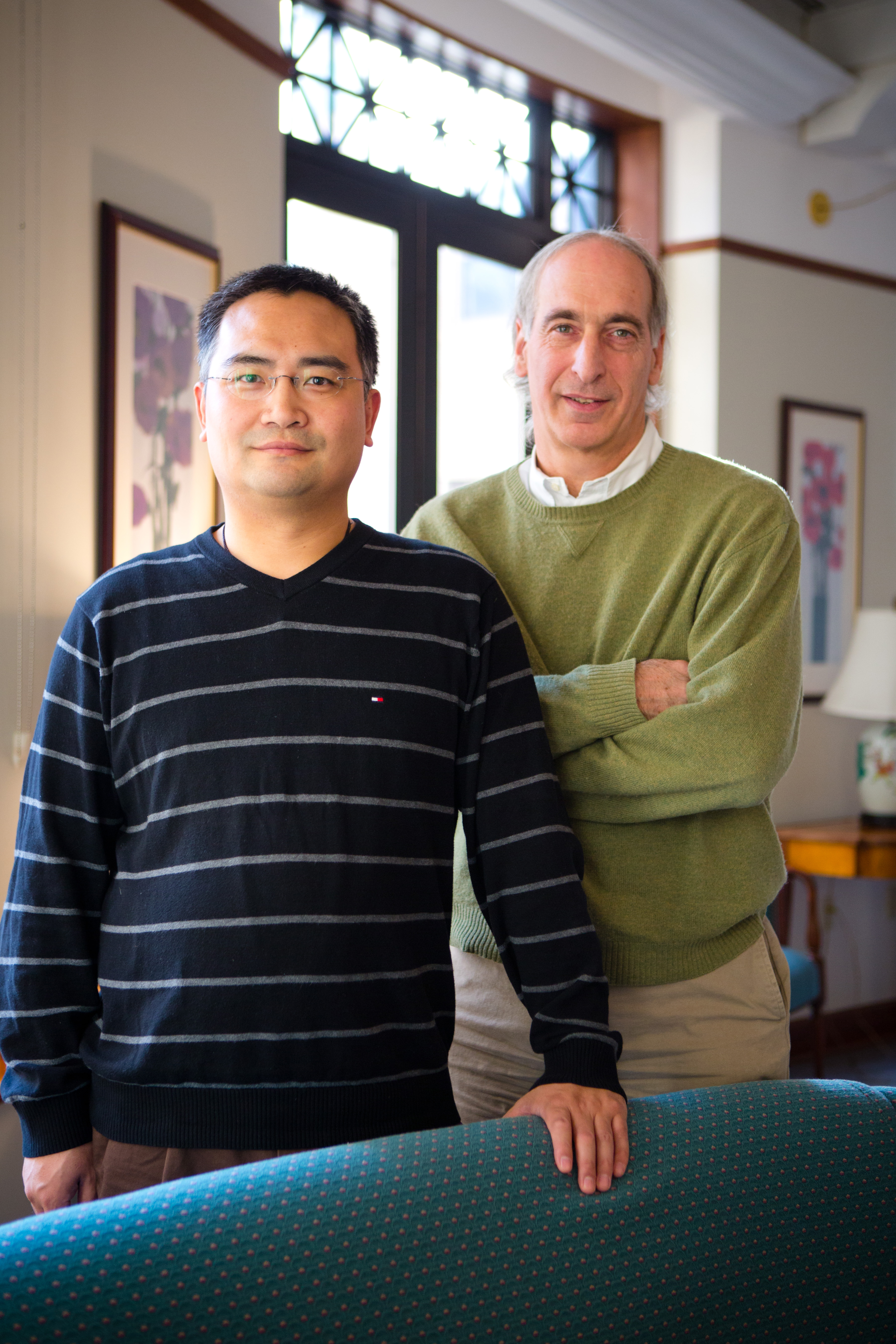
Long Shen, Ph.D. and Julian L. Ambrus Jr., MD

It looks like there's an exciting development to share about diagnosing Sjogren's. There's a new diagnostic panel called Sjö(TM) being made available that includes biomarkers for the disease.  Hip hip hooray!  The hope is that these tests will help reduce the long time to diagnosis that so many patients endure.  It's close to 5 years for the average Sjogren's patient and I've talked to many where it's taken significantly longer.  You can read more about this exciting news here.

The Sjogren's Syndrome Foundation will be partnering with the test's distributer (Nicox) to educate eye doctors about this autoimmune disease (AI disease) and the new testing available.  As many of you know, my motto is that "Sjogren's is more than dry eyes and dry mouth" so I'm hoping that rheumatologists and ENT's and maybe even neurologists that treat AI disease will eventually be brought into the Foundation and Nicox's education campaign.

Now, back to the tests. Being an inquisitive Sjoggie, I couldn't help myself and wanted more information about the exact tests that would be in the panel.  I found this article in Optomotry Times with lots of interesting details.  

The test...combines three proprietary biomarkers (salivary gland protein-1 [SP-1], carbonic anhydrase-6 [CA-6], and parotid secretory protein [PSP]) with traditional markers antinuclear antibodies [ANA], Ro, La, and Rf [rheumatoid factor]).

What's so important about these markers is that they can often be found earlier in the disease process than the traditional Sjogren's antibodies.  

Traditional tests for the disease use ANA, Ro, La, and Rf antibodies, which exhibit sensitivity limitations or are associated with later-stage Sjögren’s syndrome....The newer antibodies were found in 45% of patients meeting the criteria for Sjögren’s syndrome, but lacking antibodies for Ro and La. In patients diagnosed with xerostomia for less than 2 years, 76% had antibodies to SP-1 or CA-6, while only 31% had antibodies to Ro or La.

These new biomarkers have the potential to make a big difference for patients with clinical Sjogren's symptoms that do not initially test positive for the disease.  In my humble opinion, earlier diagnosis can lead to earlier treatment and a reduction in autoimmune complications.  So that's something to celebrate and big thanks and round of applause to those hard working University of Buffalo scientists Long Shen, Ph.D and Just L. Ambrus Jr., MD (pictured above) who made this scientific discovery possible!  

Monday, November 4, 2013

Mechanical Empathy...Better Than None

Picture Illustrative
There are many barriers to doctor and patient communication that have been widely chronicled here and elsewhere. 

One common complaint I hear from my friends with a range of chronic conditions is that if doctors could just "experience what I'm describing they would treat me differently."

It is a simple truth that in the vast majority of cases doctors cannot literally "feel" the pain or symptoms that their patients are describing. Of course most doctors have had the common cold or the flu, and perhaps even a broken bone or two, but when it comes to more uncommon conditions, like autoimmune disease, it is unlikely they have actually experienced the conditions.  And I and many other patients I know believe that makes it harder for them to relate to what we are experiencing. My personal belief is that this comprehension gap between patient and doctor is one of the reasons that many with autoimmune conditions go undiagnosed for so long and the severity of their conditions at times may be dismissed. 

As a result, I was interested to see this this article from Medpage about an actual suit to help doctors physically experience some of the limitations that RA patients do.  [Read and see an actual picture here]. Gloves from the suit were made available to try on at the American College of Rheumatology Conference this past week in San Diego. While the suit is designed to be specific to RA, many autoimmune diseases involve joint stiffness, inflammation, and limited mobility, so in my opinion it has broader relevance for most rheumatologists.  Even wearing it for just a half an hour can give someone an idea of what it means to live with mobility limitations when trying to navigate simple tasks that most take for granted.  While I would never wish an autoimmune disease upon anyone, I believe it's very helpful for those treating it to have a glimpse of what their patients go through and to see why from a clinical perspective finding the most effective treatment can be so critical for the quality of patients' lives.

These suits obviously can't impart the experience of physical pain, fatigue, and the myriad of other symptoms that many autoimmune patients have, but maybe sometime in the not so far off future, computer simulations can be combined with suits like these to make the autoimmune experience even closer to "real" life.  It might seem like out of Star Trek, but who knows what the future holds.  I hope that this development may be a part of a trend that leads to faster diagnosis, more timely treatments, and patients feeling better understood when they walk out of their rheumatologists office.

Thursday, October 17, 2013

Changes in Medicine: Not a Piece of Cake


Image Source

Medicines are a daily fact of life for me, and I know in that I'm not alone.  I'm always looking for a way to reduce the drugs that I do take when possible, since virtually all have some level of side effect or interaction with another of my medications.   However, I have learned the hard way that getting off a medicine can be as difficult as getting used to taking a new one to begin with.  I thought I would share my recent story and a few tips that I've learned to deal with any major medicine adjustment.
The backstory here: Recently, my neurologist and I decided it was time to decrease one of my medications.  This was a good thing. I take the medication to help the neurological symptoms that I have from Sjogren's.  It's an anti-seizure medication called Trileptal and helps control the pain and numbness that I have specifically in my trigeminal nerve.  It's not something that prevents my out of whack immune system from attacking itself, so if I can tolerate a lower dose I'm not putting myself at risk of a flare.
As with all medications, there were side effects especially when I first started taking the Trileptal. I felt foggy like I was sleep walking half the time. I eventually "adjusted," but my brain still only worked at a slower speed.  I felt a bit like the scarecrow from the Wizard of Oz wishing that "I only had a brain".  Well, that's not exactly true, but it did feel like I could feel the wheels creaking as the they turned in my head when I had to think hard about something. When autoimmune brain fog hit, the combination was particularly frustrating.   Still, the Trileptal was the best of the many seizure medications that I tried (and there were many) and feeling slow was the least of my problems at the time when I was having such severe, disabling neurological pain.
So fast forward over three years to this summer and it was finally time to try to decrease my dosage.  The medicine is in a tricky class of drugs since one of the risks with going down on anti-seizure medicines, even if you don't have a history of seizures, is that you can actually have one.
My doctor gave me the basic guidelines for how to go down; I thought I'd follow what he said and would hopefully be done with it in a few weeks. Suffice it to say, it didn't end up exactly like that. When I tried to half my dose as my neurologist suggested, I found myself with bad headaches everyday and unable to sleep.  What immediately became clear is that I needed to go down on this medication more gradually than the "average" person.  There was no risk to going down too slowly just to going down too fast.  If I haven't mentioned it before, I tend to be sensitive to medication generally and on many occasions find myself with the side effects that less than 10 percent of the population do. Lucky me!
At that point, I brought my pharmacist and internist into the conversation as well.  The pharmacist helped me figure out the lowest possible dose of the medication available and let me know that the pills were scored so they could be further broken down in smaller increments. Instead of going down by 300 mg or 150 mg at a time, it was actually feasible to go down by 75 mg at a time.  I have now been able to lower my dose by 75 percent and instead of it being a six week process as initially planned, it took me three months.  This is certainly an example where medicine is both art and science, and each patient might need a slightly different approach.  I was more concerned with having the least side effects possible than being off the medication as quickly as possible.  Here's a few of the quick lessons I learned through this process that will hopefully be helpful in the future.  

1) Discuss an overall strategy with your doctor.  Find out about withdrawal side effects with your doctor and, if there are any, which warrant a call to the office or a follow-up visit.  Some side effects of changing your medication might be unavoidable so make sure to ask if there is anything you can do to better manage them and know what to watch for.
2) Keep a daily log of your medication dosage and any side effects you might notice.  This can be especially useful when following up with your physician.
3) Consult your pharmacist.  Not surprisingly, pharmacists sometimes know more about the metabolism, pharmacology, and timing of medications than physicians.  (To me they seem to be underutilized resource in American healthcare.) My pharmacist has been an invaluable resource about drug interactions in the past.  Luckily, my pharmacist and neurologist had the same general recommendation for the maximum amount that I could lower my dose each week.
4) Keep your primary care doctor or internist involved in the conversation.  This is important even if you are working with a specialist.  Your primary care provider often sees you more and can help coordinate care and deal with any important issues or emergencies that might come up.
5) Do your own research about possible dosing of your medication. This can be especially useful if your doctor has not given you dosing options or you are struggling with side effects. Websites such as drugs.com can be helpful for this kind of information.
6) Don't be afraid to be your own advocate and speak up, call, or email your physician.  As a patient with chronic illness, I sometimes feel like a bother when I contact my doctors office.  But if your physician makes you feel like one, you probably might consider getting a new physician.  
7) Recognize that guidelines for medication dosing are simply that.  Some people are more sensitive to medications than others.  Because not everyone metabolizes drugs the same way, partnering with your doctor to develop an individualized approach to medication dosing can be important.

What have your experiences been with changing medications?  Please share your stories or add any tips to the list. 

Thursday, September 19, 2013

Spontaneity, the Sun, and Autoimmune Disease


The Offending Blackberries
Last weekend, my husband and I partook on one of our favorite weekend activities -- a day trip drive outside the city.  These have become part of our routine during warmer months. Day trips are easier for me in many ways than overnight ones that require more planning in terms of medicines and preparing foods that I can eat.  But unfortunately, I was again reminded that spontaneity and autoimmune disease are incongruous.  I know many of your have had these experiences where you forget for a just for a moment that you have autoimmune disease and there can be consequences.  Well, that's exactly what happened to me.

The story goes like this.  We were driving along in the country on a clear late summer afternoon.  We decided to a stop by a farm stand for an afternoon snack.  It was supposed to be a quick stop just walking into a building so I didn't think to take my sun protection armor along.  As we were about to pay for our fruits and vegetables, I noticed that someone was leaving with blackberries.  I wanted some of those -- they looked plump and delicious.  I was hungry and it was heading towards the end of berry season. I didn't know how much longer I'd be able to get those treats. So I inquired about how to get them and it turns out you had to pick them yourself.  

I had never been blackberry picking before and at the time it seemed like a great idea.  Something new to try, a bit of adventure for a Gal who has been pretty limited by her autoimmune disease.  Off my husband and I went blackberry picking.  It was not that thrilling to be crawling around picking the berries, but I did feel a sense of accomplishment when we finished.  I had put in some effort to get those berries that we were driving home with.

But, no, our story couldn't just end there. A few minutes after we got back to the car, I started to feel fatigued and weak. Like I had been run over by one of the farm tractors we had just seen.  The sun had gotten the best of me even though it was a mere half hour outside in the late afternoon.  My husband and I immediately realized that I had not been wearing my hat or long sleeve cover to protect me from the sun.  We had been truly living in the moment -- a rare occurrence but one that does not always work out so well.  

The next day I was bone tired and every joint in my body ached.  Walking was difficult and I spent a full day on the couch just resting as my body demanded.  I had no choice in the matter.   By the following day, I started to slowly recover. I was extremely lucky this time. I've had sun induced flares that have lasted a couple months. Boy, I am glad it seems this time I escaped.

Were the blackberries so delicious that it made the whole experience worth it?  They were good, but not good enough to make a mini-flare worthwhile.  When I'm feeling better I always want to do more. People, and seemingly endless articles I read, say you should "forget about your diseases" and "just go for it…you'll feel better."  I sometimes try. But what they don't understand is that when I do, there is all too often a real cost. 


Tuesday, September 10, 2013

Preventing Lyme Disease Déjà Vu


Tall Grasses Can Be A Tick's Favorite Habitat
Ah, creepy, crawly, and flying critters. The unsung fun of summer.  I'm hoping this year it will turn out that I have gotten the better of them.

I am recently back from vacation and I'm really hoping I didn't get any party favors from the wild this time. Not like last summer,  as some of you may remember, when I came home  from vacation with a not so pleasant surprise -- Lyme disease.  (You can read about that little adventure here.)

I have to admit that while I was in area known for Lyme Disease last August, I did not take enough extra precautions to prevent tick bites or bug bites in general.  Up until that point, I had been lucky enough to live and vacation in the Northeast for most of the last 30 years and never contract Lyme. Little did I realize that Lyme is now everywhere in the region.

That said, it wasn't laziness or a feeling of over-confidence that prevented me from taking extra precautions. I wasn't sure what to do about bug spray.  I had always used sprays with DEET, but with autoimmune disease and extensive allergies, I became concerned about using strong chemicals.  My doctor even advised me to avoid DEET if possible, but didn't suggest any alternatives to use. That obviously wasn't very helpful advice. And unfortunately I over-compensated; I was not smart and just went without insect repellent altogether. This year that wasn't an option.  My doctors expressed serious concern about me contacting Lyme or another insect born illness again.

So over the past few months, I've made insect protection a priority. My go-to has been All Terrain Herbal Armor Insect Repellent.  It's a DEET-free spray containing a number of oils such as citronella and lemongrass that are supposed to be effective bug repellants. It did not cause any skin irritation problems and worked well.  I've actually been hiking in the woods and come back without any mosquito bites. The solution has a woodsy smell, but nothing too over powering and certainly there is no chemical odor. Would I wear it as a perfume? No, but the smell did not deter me from using it. I prefer the smaller 2 ounce bottle so it doesn't add to much additional weight to my purse, which is already chock full of essential meds and EpiPens.

I also experimented with the Badger Balm Ant-Bug Balm.  It's ingredients are very similar to the All-Terrain with a few small differences.  The Badger Balm contains rosemary oil and the All Terrain has soybean and peppermint oils. While they worked equally as well, the Badger Balm's smell was a little too much for me so I tended to use the All Terrain more often.  This is probably just a matter of personal preference.  With both of these natural repellents, it is much more important to cover every inch of exposed skin to prevent bites than when using DEET.  I also found re-application to be essential at least every two hours.  

Natural insect repellent was not my only strategy to prevent getting Lyme or West Nile.  I tried to be vigilant about keeping myself covered when outside in wooded areas or those with tall grass. This meant trying to wear longer pants like capris (as opposed to shorts and dresses), sneakers, and socks that went above my ankle.  I have to keep as much skin covered as possible to prevent autoimmune flares in the sun so adding bug protection to my routine wasn't really a major change.

While I wasn't prefect all the time--sometimes I did find myself in the grass with flip-flops on--I was definitely much more cautious than last summer. I'll soon found out if my precautions worked and I was able to prevent those tiny critters from transmitting anything to me.


*I have no relationship with any of the companies whose products are mentioned in this post* 

Wednesday, August 21, 2013

My Summer Discovery: The Lemon Cucumber

I find one of the best things about summer at least in the Northeast is the availability and wide assortment of locally grown fruits and vegetables.  This season I've recently discovered a new favorite at the farmer's market, the lemon cucumber.  It actually tastes nothing like a lemon, but it does resemble one in size and color, as you can see below.   They do taste like cucumbers, but have a thinner skin than other varieties.  This means no peeling, which also means less work to do with my hands, which at times are painful from autoimmune disease.


The lemon cucumber also has a high water content making them quite refreshing, especially on hot summer days.  And because of their wider shape than other cucumbers, they serve a dual purpose beyond just salads.  I have been using them to make sandwiches--not as a vegetable inside the bread, but as a substitute for bread. Being allergic to corn and sensitive to gluten, makes it hard for me to find a bread that is actually allergy friendly. While I have tried, my bread making attempts have not turned out well so far.   The  lemon cucumber has given me another choice.  I've found that they go particularly well with turkey, hummus, or even smoked fish.  All healthy food options for those with autoimmune or inflammatory diseases.


As a person with multiple food allergies, it's always a nice treat to add something new to my diet. Have you made a new fruit or vegetable discovery this summer?

Tuesday, August 6, 2013

Update: Vitamin D Yo-Yo

A little over a month ago I wrote about the drop in my Vitamin D levels and wanted to update my wonderful readers on recent developments.  The basic story is that my doctor had suggested that I try reducing my D dose from 50,000 IU a week prescription to the daily recommended dose. This ended up being a mistake. 

When I reminded my doctor to recheck my levels, they were low.  (Yes, I had to remind my doctor to check.)  As a result, I had to go right back on to the 50,000 weekly dose.  It was a game of Vitamin D Yo-Yo.

The critical question is whether I'm feeling any different now that I have been on the higher dose for about six weeks?  The answer, I am happy to report, is YES.  I'm not sure I realized how badly I had been feeling over the last few months, particularly how severe my fatigue had been.  From comments on my blog and Facebook, I know that others with autoimmune disease have had this experience too.

Even though it seems odd from something so simple, I clearly have more energy and stamina.  I've actually surprised myself in being able to partake in a few activities that were a bit more than I thought that I could do.  I went hiking.  Granted it was a short hike, listed as easy and perfect for children, but that's just about the right speed for me.  There was still the going down and then climbing up from the waterfall, which were a challenge.  Yes, did I mention that I got to see a beautiful waterfall (pictured below).  That was a bit of magic for me.


Since re-upping Vitamin D, some of my autoimmune symptoms seem to be slightly more tame as well.  The new neuropathy that had developed in my feet a few months ago is less of a problem as is my joint pain and swelling.   While I realize some of this could be chance and that I am just having a lull in disease activity, the fact that I am able to spend less time in bed and more time with family and friends is enough evidence for me that keeping my Vitamin D levels within normal range is important for how I feel.  It would be hard for me to believe that the timing is purely coincidental and taking a prescription Vitamin is much easier to swallow than some of my other medications.


Thursday, July 18, 2013

Autoimmune Life: Here Comes the Sun...and the Umbrella?

Image Source
The recent heat wave has been really tough on me. Like many autoimmune disease patients I know, I struggle with heat and strong sun of the summer months. This summer, as others in the northeast know, as been particularly bad.  The other day, I walked to the farmer's market before ten o'clock and it was already too hot and sunny for met to be outside.  (I am on several medications, which make my skin particularly sensitive to direct sun then there is the chance of a flare.) The rays of the sun felt like they were burning my skin after about five minutes.  By the end of my twenty minute outing, I felt fatigued, nauseous and my skin was already red. I had to stop in a store for a few minutes on my way home to cool down and make sure I could make it home in one piece. 

This kind of heat reaction happens to me even with the many sun protection measures that I take, which I know are common for my fellow autoimmune friends.  I have developed a pretty reliable playbook:

1. SPF 30 or above sunblock
2. The big floppy UPF protected hat, 
3. Big sunglasses with UV protection. 
4. Staying in during peak sun hours
5. Keeping my arms and legs covered.

It's a short list, but easier said then done. The last one, dressing like it's October, in particular can be annoying when it's already 90 degrees and wearing even light long sleeves can just add to feeling hot.  Staying inside except for later in the evenings has been the only strategy that is full-proof but it is difficult in practice and leaves me feeling a bit antsy.  Who wants to have to stay inside during the summer months?  I love the summer. I have to do enough of the hibernation during the winter.  

So, for obvious reasons I've been looking for a strategy to be outside during heat--if only for short periods of time so I can do at least do a few errands.  I've finally come up with something that helps. It's a radical new invention: an umbrella!  

Of course, I've sat under umbrellas at a pool or on a vacation at the beach, but I had never thought of holding one just walking around in my neighborhood.  I suppose this is what aristocratic women used to do to protect their skin in pre-sunblock days so I'm in good company. I'm not sure why ladies' umbrellas went out of fashion but I'm told they are still very popular in China. Even intuitively it make sense that an umbrella is more effective than a hat in almost every respect.  I've found some compact umbrellas online with UPF protection that should work well both rain or shine.  

If you had told me ten years ago I was going to walking down the street on a sunny day in July with an umbrella I would have thought you were nuts. However, many things have changed in my life since being diagnosed with autoimmune disease. My concern about what I look like walking down the street is far down the priority list.  So, if you see someone walking down the street on a bright summer day with an umbrella, perhaps, like me, it's not that they mis-heard the weather channel, but that they are just taking a walk on the shady side.

Tuesday, July 16, 2013

Experimenting with Summer Shakes

The weather in the Northeast has been super super hot and humid.  I would say it feels more like I am living in Miami right now with high heat and short thunderstorms almost everyday. This climate is not my cup of tea. I'm a bit like Goldielocks and prefer it to be not too hot or not too cold.

There is however good reason for my preference. I'm sun and heat sensitive, both exacerbating my autoimmune symptoms. Basically, I wilt when I step outside so it has been indoors for me except early and late in the day when the temperatures are only in the 80s.  But that doesn't mean I haven't been craving tropical drinks during this tropical like weather. The problem is that I'm allergic to mangoes and bananas so instead I thought a cool berry concotion might hit the spot.


Now, I didn't follow an exact recipe and just taste tested as I went along.  I've always enjoyed making mixtures and improvising as I cook.  This time I added fresh blackberries, strawberries, blueberries (I only had a few in the fridge), a cup of ice, and a splash of black cherry juice. I included about two tablespoons of milk about half way through blending for smoother texture.  Almond or Coconut milk would be good substitutes.

I do sometimes feel deprived because my food allergies prevent me from eating and drinking many of my favorites.  So I am always excited when I experiment and make something new and delicious. It was definitely cool and refreshing. Maybe a little tart for some, but I wasn't in the mood for anything too sweet.

The best part is that it's super healthy with anti-inflammatory properties, low in calories, and very filling. Filling is important for me since I get hungry pretty frequently. These fruit shakes can work for breakfast, a snack, or dessert. It's also an easy way to make sure you're getting enough fruits and vegetables each day.  I tend to eat enough fruit, but sometimes I skimp in the vegetable category.  I've recently started using the CDC's fruit and vegetable calculator which tells you based on age, gender, and level of daily physical activity how many cups to have in a day. Click here to try it.

I think that this is just the beginning of my blending experiments.  I'd like to try adding vegetables and fruits together for my next round. I'm thinking apples, pears, spinach, and blueberries. The longer term question is whether my health-shake making might cause some improvement in how I feel.  I'm not expecting a miracle, but changes in my diet, like eliminating gluten, have made a large impact before.

As Hippocrates said, “Let food be thy medicine and medicine be thy food”

I would love to hear from others who are smoothie chefs about their favorite recipes and whether eating these smoothies and shakes have made a difference in any aspects of their health.